Waterproof selfie sticks are some pretty awesome devices that allow us to take pictures and videos underwater, or in the rain, without the fear of messing up our devices. Did you know that these unique selfie sticks can rotate a full 360°, letting us shoot from virtually any angle? So, let’s take a closer look into the fascinating engineering behind how these tools actually do this.
What Is a Waterproof Selfie Stick?
Waterproof selfie sticks are essential gear for anyone who loves taking pictures and videos while swimming, snorkeling, or shooting in the rain. Some waterproof gadgets are built mainly to shield our devices from water damage, while others are designed specifically to help us capture great moments underwater. A good waterproof selfie stick combines smart engineering with durable materials to keep our devices safe while we push the limits in extreme conditions — whether that’s a coral reef, a rainstorm, or a day at the beach.
What separates a genuinely reliable waterproof selfie stick from a basic one usually comes down to two things: how well it’s sealed against water at every moving joint, and how smoothly the rotation mechanism performs even after repeated exposure to sand, salt, and moisture. Both of these matter more than most buyers realize until the stick has been in regular use for a few months.
How the 360° Rotation Works
The 360° rotation feature is one of the best examples of thoughtful engineering in a waterproof selfie stick. It lets us adjust the angle of our device with ease, without ever having to reposition the entire stick or break the waterproof seal to make an adjustment. This feature comes from several parts working together — gears, springs, and bearings — that skillfully combine to let us move the stick effortlessly while keeping the internal mechanism fully sealed.
Here’s how each part contributes to the rotation:
- Bearings sit at the pivot point and allow the mount to rotate with minimal friction. A quality bearing keeps the motion smooth even after the stick has been exposed to sand, salt water, or grit — without one, the pivot tends to feel gritty or inconsistent after just a few uses.
- Springs provide the tension needed to hold your device at whatever angle you choose, rather than letting it flop around once you let go. The spring tension has to be calibrated carefully: strong enough to hold the camera’s weight steady underwater, but not so tight that rotating becomes a struggle with wet hands.
- Gears help translate your hand movement into precise, controlled rotation, rather than a loose or jerky motion — this is part of what makes it possible to fine-tune framing one-handed while treading water.
JIANGPAI designed this rotation system to be strong and reliable specifically for underwater and rain photography, where the mechanism needs to perform consistently shot after shot without the user being able to easily inspect or adjust it mid-use.
Design Elements That Make the Stick Easier to Use
Beyond the rotation mechanism itself, waterproof selfie sticks are built with a number of design details that make them genuinely practical to use in real conditions, not just on paper:
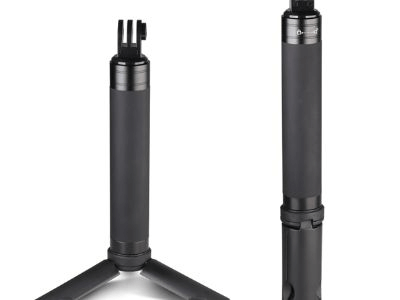
- Extendable and retractable shaft. Being able to extend or shorten the stick based on the shot you’re going for gives you real flexibility — a longer extension is useful for wider framing or group shots, while a shorter length is easier to control one-handed while swimming or snorkeling.
- Non-slip textured handle. The handle is built with a specialized grip texture to make it comfortable to hold and to prevent it from slipping out of wet hands — a detail that matters far more here than on a standard, dry-land selfie stick.
- Integrated 360° rotation head. The rotation feature is built directly into the mount design, so switching angles doesn’t require detaching or reattaching your device — you simply twist the head to the angle you want.
- Sealed housing at every moving joint. Anywhere the stick has a joint that moves is a potential entry point for water, so a properly engineered waterproof selfie stick uses gasket or O-ring seals specifically at these points, not just around the outer shell.
If you’re planning an underwater adventure, a waterproof portable LED selfie stick is worth considering for these design features alone — the added light also needs the same sealed-joint engineering as the rotation mechanism, since it introduces another interruption in the shell that has to be protected against water intrusion.
Robust Materials & Intelligent Technology
Waterproof selfie sticks are built from specific materials and paired with smart engineering to ensure they hold up in challenging conditions over the long term, not just for a single trip:
- Corrosion-resistant metal or reinforced polymer is used for the bearing and pivot components, since salt water is especially hard on unprotected metal and will cause stiffness or corrosion over time without the right material choice.
- UV- and impact-resistant outer shells matter for sticks that spend a lot of time in direct sunlight at the beach or pool — lower-quality plastic can become brittle and crack with repeated sun exposure.
- Water- and rust-resistant hardware throughout the stick, not just around the visible seams, protects the internal rotation mechanism from the inside out.
- Impact resistance is also built in, since underwater and poolside use inevitably means occasional bumps and drops that a standard selfie stick isn’t designed to handle.
The rotation feature itself is engineered so it’s never a weak point in the system — smart tensioning and sealed bearings mean the mechanism keeps performing reliably even as the stick is exposed to repeated water, sand, and temperature changes. With durable materials and intelligent engineering combined, JIANGPAI has built a tool designed to be a reliable companion for underwater photography trip after trip, rather than something that degrades after a season of regular use.
Getting a Smooth and Precise Shot
Construction from top-tier materials, paired with thoughtful engineering, is what results in an action camera selfie stick with genuinely smooth rotation. The combination of gears, springs, and bearings is what makes the rotation feature responsive and consistent, so you’re not fighting the mechanism to line up a shot — you’re getting the angle you want on the first try, even in moving water or low visibility.
A few practical tips for getting the smoothest results:
- Rotate the head fully before your first use to check that the motion feels smooth and consistent across the entire range, not just gritty in certain spots.
- Avoid forcing the rotation past its intended range — the sealed joints are engineered for a specific range of motion, and forcing beyond that can compromise the seal over time.
- Rinse the rotation head with fresh water after use in salt water or sandy conditions to prevent buildup around the pivot that can gradually stiffen the motion.
Our engineers at JIANGPAI have focused specifically on making sure this rotation feature performs smoothly and accurately shot after shot, trip after trip. Combined with an ultra-wide camera lens on many action cameras, a well-engineered waterproof selfie stick can help you capture genuinely great footage underwater — sharp, well-framed, and without the hassle of constantly repositioning the entire stick just to adjust your angle.
Final Thoughts
The 360° rotation on a waterproof selfie stick might look like a simple twist-and-shoot feature, but it’s the result of real engineering trade-offs — balancing smooth, precise motion against the need to keep every joint fully sealed against water. Bearings for low-friction rotation, springs for holding an angle steady, gears for precise control, and sealed housings at every moving point are what make that balance possible. When you’re choosing a waterproof selfie stick, it’s worth looking past the marketing language and checking these engineering details specifically — they’re what determine whether the stick still rotates smoothly after a full season of underwater use.