It’s safe to say that the more interested you become in photography, the more gear you inevitably accumulate. The more you learn, the more you realize that to get the best results you need the right kit for the job at hand, whether that’s lenses, accessories, bags, or even clothing. And to that end, we’re here to suggest that every photographer should have three tripods. That’s right, three. And no, we haven’t gone gear crazy. Bear with us…
Tripods are an essential kit regardless of what you shoot. Even if you’re an avid portrait and fashion photographer you may not use a tripod for every shoot, but there will be times were mounting the camera to maintain composition is the best way of working, and doing so can free you to interact with your model without having the camera constantly held up to your face.
If, on the other hand, you’re a landscape, cityscape/architecture, or macro photographer, a tripod or some other type of camera support is an absolute necessity. You can of course shoot these subjects handheld, but 90% of the time a tripod will be the best option for ensuring pin-sharp shots.
So here are the three types of tripod we believe every photographer should have at their disposal – it all comes down to stability, size, weight, and convenience.
Main Tripod: Carbon Fiber
A full-size tripod offers greater stability than smaller and lighter travel models, which is important if you shoot long exposures with the tripod at full height, or if you like to shoot in wide-open windswept landscapes, as there’s less chance of the tripod moving, which could result in blurred images. A full-size tripod will have a greater maximum working height than a travel model and will be more stable at this height.
When purchasing this type of tripod it’s common to have to select the legs and the head individually. This means you can select the most appropriate type of head for the type of photography you shoot, and to suit your personal preference, plus you’re not confined to a single manufacturer – you can mix and match to get the best combination.
Second Tripod: Travel Model
You’ve got your sturdy main tripod, but there will be times when you need to cut down on size and weight. While a full-size carbon fiber tripod doesn’t weigh that much, with a head attached it will still be larger and heavier than a dedicated travel tripod.
Some tripods are designed to fold up into a compact package that, in some cases, can fit into a carry-on bag. They are also designed to be lighter than their full-sized counterparts. Usually, they have four or more leg sections, legs that can fold up around the center column, or a center column that drops down between the legs for transport. In general, they do not extend to the same heights as full-sized tripods, so get ready to bend over while shooting. Other than those features, the travel tripod is basically the same as any other three-legged camera support.
A travel tripod will typically weigh less than 1.5kg, have a closed length of around 40cm, a maximum height of around 150cm, and a maximum payload of around 4kg. So not only are they light to carry, but they’re small enough to fit inside a small suitcase, while they can comfortably support anything from a compact system camera up to a professional DSLR.
Third Tripod: The Pocket Option
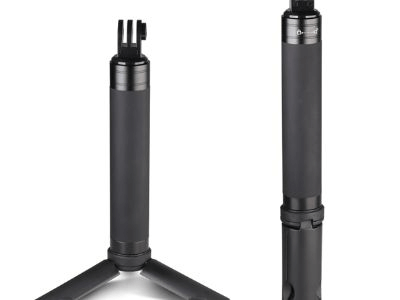
Mini tripods have come a long way in recent years, and while some models are extremely basic others offer all the functionality you’d get in a full-size tripod, but in a pocket-sized package. As with travel tripods, the main advantage here is reduced size and weight, and this type of tripod is ideal when even a travel tripod would be too big and heavy, or when you want an almost ground-level viewpoint.
These tripods really are take-anywhere options, and perfect for those times when you don’t think you’ll need a tripod but want to bring one just in case. The main downside is that the maximum payload will only be around 2kg, while the maximum height will range from around just 20cm to 50cm, so you may have to be creative with where you position the tripod if you need more height. On the plus side, however, a tripod this low to the ground can provide some interesting viewpoints.
A Final Thought
So, if the idea of owning three tripods sounds excessive initially, once you consider how each option can enhance your photography in its own way you’ll see that it makes a good deal of sense. It’s a lot like camera bags really – most photographers have two or three for different scenarios. With tripods, it all comes down to what you’re able to carry in any given situation, balanced against how much stability you need. There will always be times when you have to use a larger and heavier tripod than you’d like, but nothing beats having the option to lighten your load if possible.