The GoPro Hero 9 Black is waterproof straight out of the box, which leads a lot of owners to assume a separate waterproof case is unnecessary. For swimming and light splashing, that’s true. But the moment you go deeper than the camera’s built-in rating, or start shooting in cold, humid, or gritty conditions, a dedicated housing stops being optional and starts being the difference between getting the footage and flooding a camera.
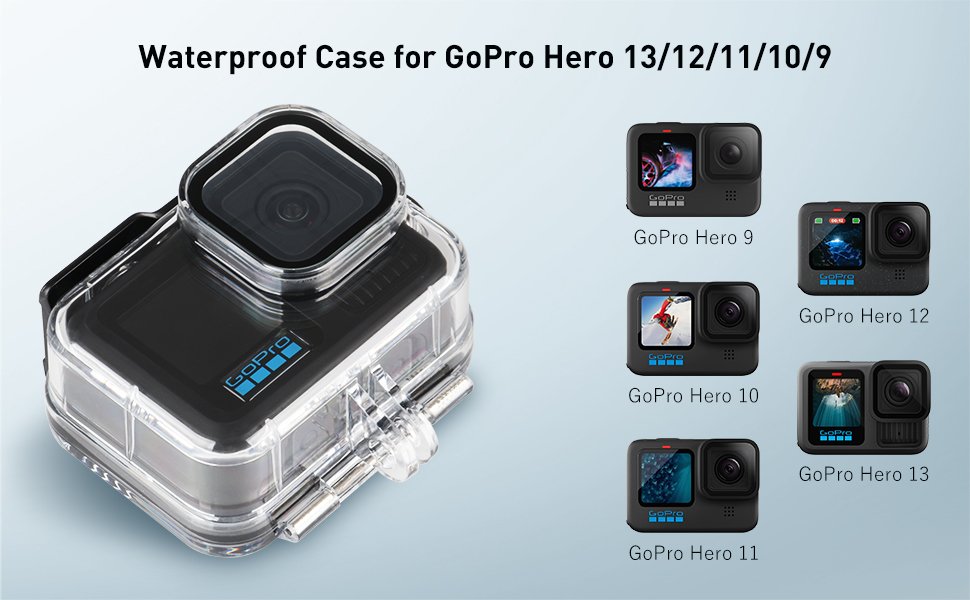
At HSU we design and test protective housings for GoPro and other action cameras, and the most common mistake we see is buying a housing based on the word “waterproof” alone, without checking what depth it’s actually built for or what else it protects against. This guide covers when you genuinely need a housing, what separates a good one from a weak one, and what to check before buying, using our own HSU 60M Waterproof Case for GoPro Hero 9 Black as a reference point.
What the Hero 9 Can and Can’t Do Without a Housing
The Hero 9 Black’s built-in waterproofing is rated to roughly 10 meters. That covers swimming, kayaking, pool use, and shallow snorkeling comfortably. It does not cover:
- Scuba diving beyond about 10 meters. Water pressure increases quickly with depth, and the camera’s own seals aren’t designed for it.
- Repeated use in salt water and sand. Even within the depth rating, grit around the door seal is one of the most common causes of leaks over time.
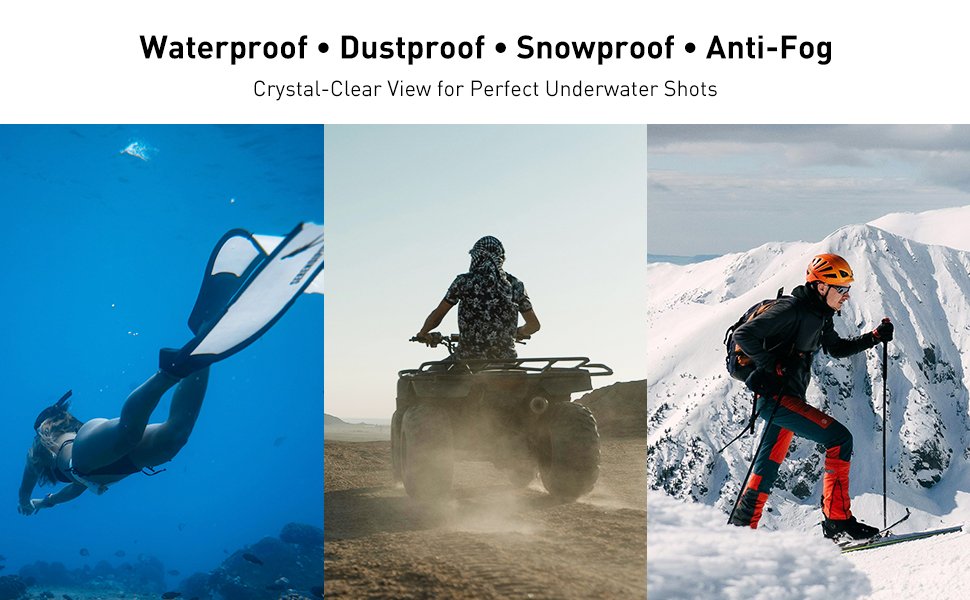
- Cold, humid environments where the lens fogs. The camera itself has no anti-fog protection built in.
- Hard knocks and scratches to the lens. The built-in lens cover is exposed, and a scratch there is a permanent hit to image quality.
What a Good Dive Housing Actually Does
A housing is a second, sealed shell around the camera. It does several separate jobs at once:
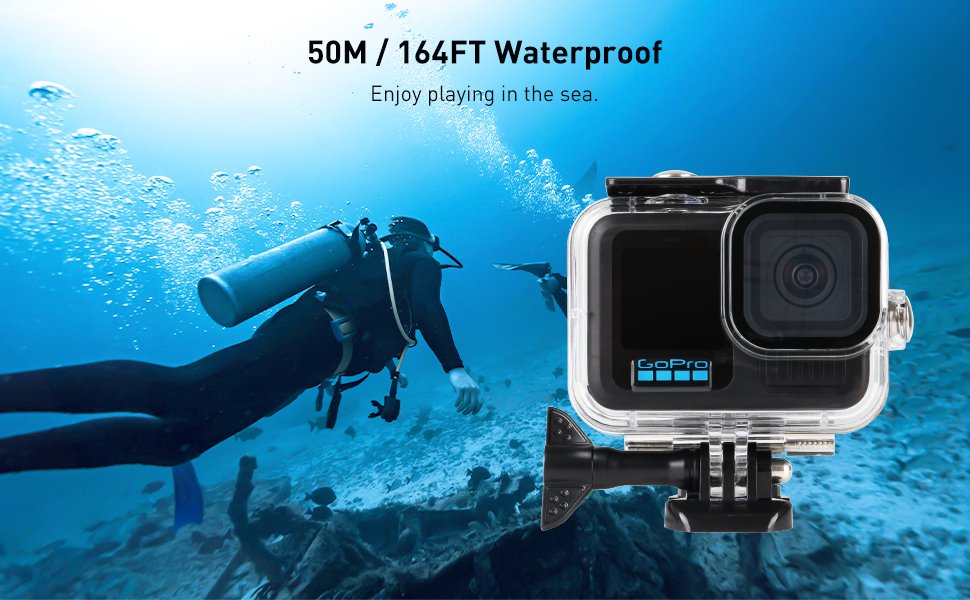
- Extends the usable depth. A properly sealed housing with a locking buckle and a compression seal lets the camera go well beyond its native 10 meters. The HSU housing is rated to 60m, which covers recreational scuba depths that the bare camera can’t handle.
- Keeps the lens clear and scratch-free. A tempered glass lens window with high light transmittance protects the camera’s real lens from scratches while keeping footage sharp. Cheaper housings use plastic windows that scratch easily and soften the image.
- Fights fogging. Condensation inside a sealed housing is one of the most common reasons underwater footage ruins itself mid-dive. Anti-fog protection built into the housing helps the lens stay clear when you move between warm air and cold water.
- Absorbs impacts. The hard shell takes the knocks that would otherwise land on the camera body, which matters on boats, rocks, and reefs.
What to Check Before Buying a Housing
- Depth rating, and what it was tested for. The listed depth should match the deepest you actually plan to go, with a margin. A housing rated well beyond your typical depth is safer than one rated just barely enough.
- Exact camera model fit. Housings are molded for specific camera dimensions and button positions. A housing designed for the Hero 9 Black should not be assumed to fit other models, and using it with the wrong camera can damage the camera or the housing. Check the compatibility list carefully.
- Lens window material. Tempered glass with an anti-reflective coating is the better choice for image quality and scratch resistance. A flat window also avoids the distortion that curved plastic can introduce.
- Seal and latch design. A single buckle that locks firmly, with a rubber seal that sits cleanly in its groove, is more reliable than a complicated multi-latch design. Inspect the seal for debris before every dive.
- Button access. You need to start and stop recording without opening the housing. Check that the shutter and mode buttons are reachable and responsive, especially with gloves or wet hands.
- Included extras. A silicone sleeve around the camera helps protect it inside the housing and traps a little heat, which can help in cold water. A floating strap or mounting adapter is also worth having since a dropped housing sinks fast.
How to Use a Housing Without Leaks
- Inspect the seal before every dive. Look for sand, hair, or lint on the rubber gasket. Even a single hair can cause a slow leak.
- Test it empty first. Close the housing with no camera inside and submerge it in a sink or bucket for a minute. This is the cheapest insurance you can buy.
- Insert the anti-fog inserts according to the instructions. Do this right before closing the housing, not hours earlier, since they work best when freshly applied.
- Close the buckle fully and double-check the latch. A half-closed latch is the most common user error behind flooded housings.
- Rinse in fresh water after every salt water use. Leave the housing closed while rinsing, then open and dry the seal separately.
- Store with the housing open. Leaving it closed for long periods can flatten the seal over time.
Frequently Asked Questions
Is a housing necessary if I only snorkel in shallow water?
Not strictly. The Hero 9’s built-in waterproofing is enough for shallow snorkeling, but a housing still adds lens protection and fog resistance, which many people find worthwhile even at shallow depths.
Will a housing affect the audio?
Yes. A sealed hard housing muffles sound compared to the bare camera, which is one reason some people use a housing with a skeleton or open back door when audio matters more than depth. For underwater footage, audio is usually limited anyway, so this is rarely a dealbreaker.
Can I use this housing with other GoPro models?
It’s designed specifically for the Hero 9 Black. Different GoPro models vary slightly in size and button layout, so always check the compatibility list rather than assuming a fit.
How often should I replace the seal?
There’s no fixed schedule, but inspect it regularly and replace it if you see cracks, flattening, or permanent deformation. Heavy salt water use and sun exposure will shorten its life.
Does a housing make the camera too bulky to mount?
It adds some size, but most housings include a standard mounting buckle so you can attach them to the same mounts you use for the bare camera.
Final Thoughts
The Hero 9’s built-in waterproofing is genuinely good, but it has a ceiling, and diving past it without a housing is how cameras get flooded. The details that matter in a housing are straightforward: a depth rating that covers where you actually go, a tempered glass lens, real anti-fog protection, and a seal and latch you can inspect and trust. Get those right and the housing disappears into your routine, which is exactly what protective gear should do.
About the author: This guide is written and maintained by HSU’s product team, who design and test protective housings, cases, and mounting accessories for GoPro and other action camera systems. Specifications and usage notes are based on hands-on product testing and are updated as camera generations and accessory standards evolve.